Meet the founders.
Builders who kept colliding with the same problem — from product, from design, from tech & research. Inkstone is what happens when you stop working around broken knowledge systems and start building the infrastructure to fix them.

Sukrit Mukherjee
Sukrit has built across both ends of the product spectrum — 0→1 in deep tech and consumer, and at scale at market leaders. As founding PM at SigTuple, he shipped India's first AI-powered digital pathology platform into clinical use — an environment where wrong answers cost lives. At Myntra and Zoomcar — India's largest fashion and shared mobility platforms — he led products at scale across tens of millions of users.
He also co-founded Technology Counsel Foundation, building and running training programs at the intersection of technology, law, and policy — domains where getting it wrong has real consequences.
Across every context, the same pattern kept surfacing: critical knowledge existed everywhere; the infrastructure to make it transferable did not. That collision became Inkstone.
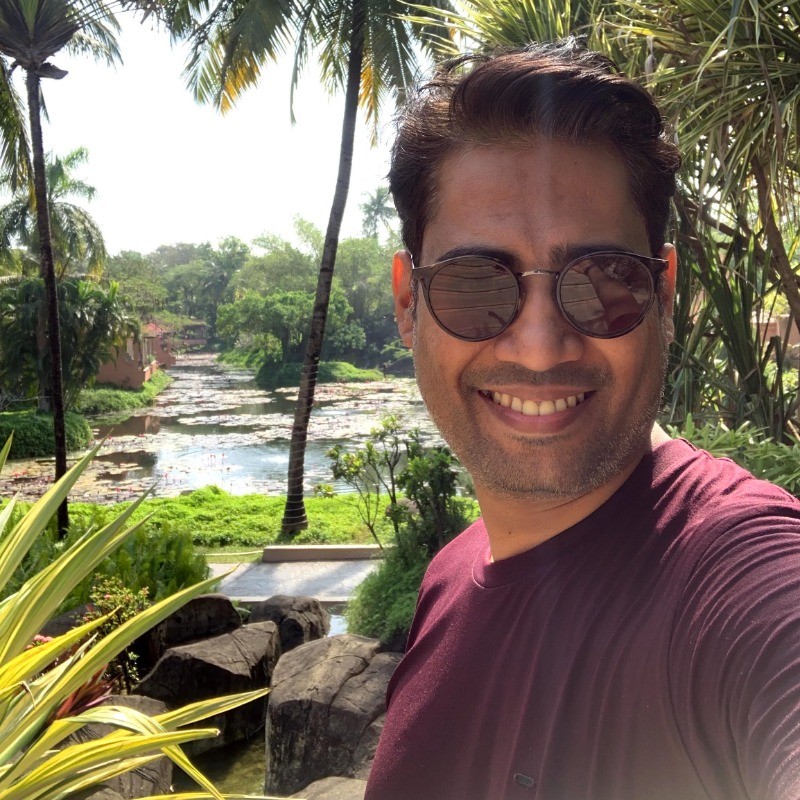
Nitin Rana
Nitin is a human-centred product designer with a proven track record of building complex, user-centric mobile and web products across high-stakes domains. His design philosophy — usable, feasible, scalable — has shaped products across fintech, e-commerce, and enterprise systems where getting the experience wrong has real consequences. A data-informed designer who refuses to be merely data-driven, he works at the intersection of user psychology, business strategy, and technical constraints — using data as one input alongside deep user research and experience to make decisions that hold up under pressure.
At Inkstone, Nitin is designing the experience layer — turning dense, interconnected professional knowledge into something navigable, verifiable, and genuinely useful. He believes feasibility isn't a constraint that kills innovation; it's the constraint that forces it. His obsession with understanding how people actually learn and work — the why behind every success and failure — is the foundation of Inkstone's concept graph and assessment architecture. For Nitin, the best design doesn't simplify complexity away; it makes complexity accessible without destroying the structure that gives it meaning.
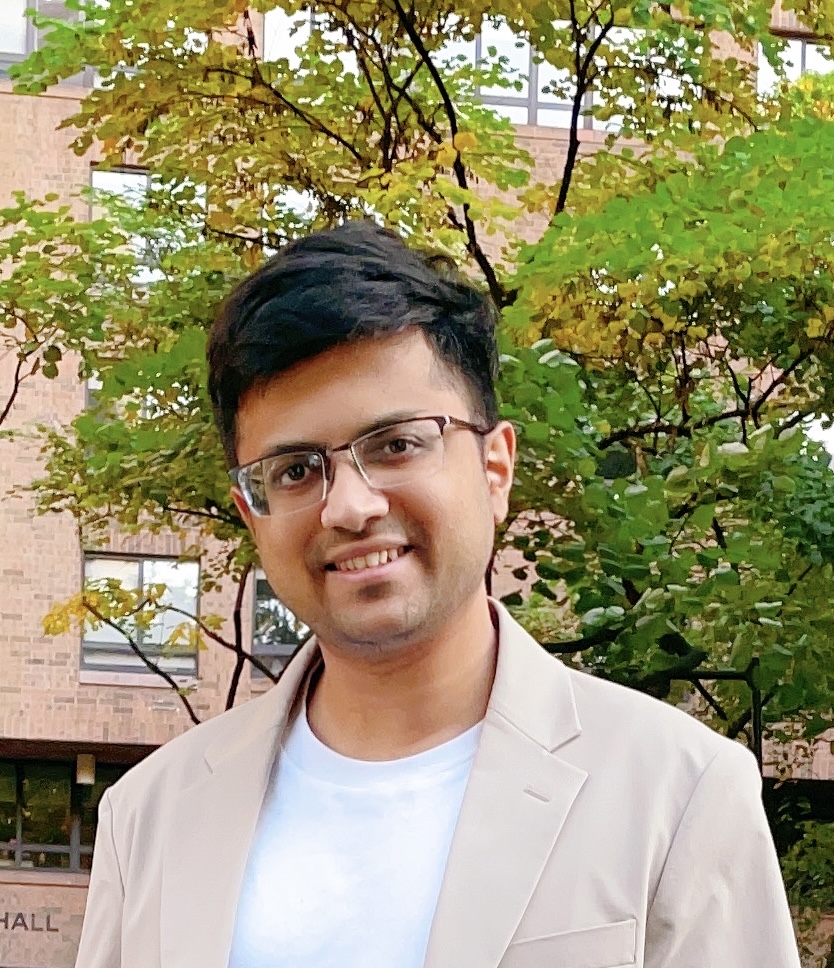
Ameya Joshi
Ameya is an AI researcher who has spent a decade at the frontier of deep learning — from adversarial robustness and generative models during his Ph.D. at NYU, to building multimodal foundation models for genomics at InstaDeep, to developing generative models at Playground AI. His published work on semantic adversarial attacks (ICCV) and invertible generative networks has shaped how the field thinks about model reliability and controllable generation. He's currently building next-generation document understanding models at Extend AI.
His path through SigTuple — where he led a team building ML-powered pathology and ophthalmology systems, shipping India's first commercial deep learning models for retinal imaging — gave him firsthand experience with the exact problem Inkstone is solving: turning dense, high-stakes professional knowledge into systems that reliably work. At Inkstone, Ameya advises on the AI architecture that powers the concept graph and assessment engine — bringing the rigour of academic research and the pragmatism of shipping production ML systems in domains where accuracy isn't optional.
Partner with us.
Tell us where context breaks. Tell us where readiness is assumed instead of proven. Tell us what the current system can’t carry forward.
If you’ve felt the gap between “I read it” and “I can do it,” you already understand the mission. If you believe understanding is the bottleneck behind performance, safety, and progress - build with us.
We’re building the infrastructure for the next era of competence.
Read the manifesto
Share your thoughts
Your experience shapes what we build. Tell us where knowledge breaks down — we're listening.